Featured Equipment

  • 400 MHz Nuclear Magnetic Resonance Spectrometer (NMR)
    2026-10-28
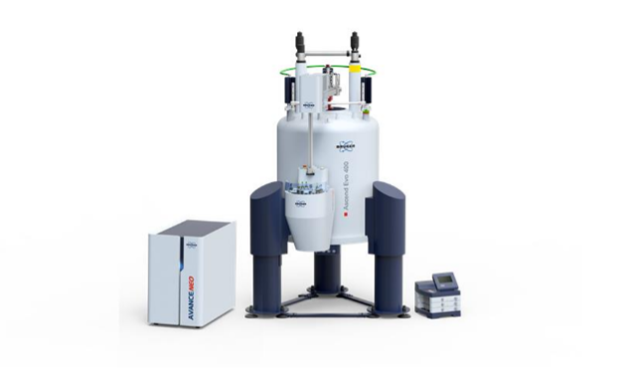
    400 MHz NMR (Bruker):A core analytical instrument for elucidating the molecular nature of substances. Based on the nuclear magnetic resonance phenomenon, it detects nuclei with non-zero spin and enables precise analysis of molecular structures, configurations and conformations, bonding modes, interactions, and dynamic processes. It supports molecular structure identification, quantitative composition analysis, reaction mechanism studies, intermolecular interaction research, conformational analys
  • 600 MHz Cryogenic NMR Spectrometer
    2026-10-28
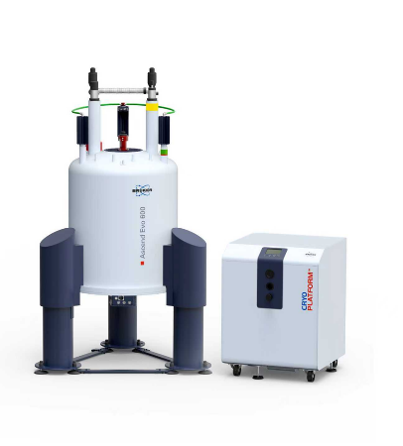
    600 MHz Cryogenic NMR :A core analytical instrument that leverages cryogenic technology to overcome detection limits and empower cutting-edge research. With cryogenic technology as its key advantage, combined with the 600 MHz high resonance frequency, it effectively suppresses interference from molecular thermal motion, enhances spectral resolution and detection sensitivity, and accurately captures resonance signals of non-zero-spin nuclei. It efficiently analyzes challenging systems such as bio
  • Scanning Electron Microscope (SEM)
    2026-10-28
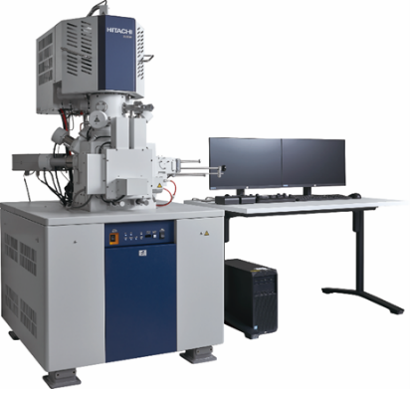
    SEM (Hitachi SU8600):The scanning electron microscope acquires microstructures of material surfaces at the nanoscale. It organically integrates the electron-beam, vacuum, imaging, and analysis systems. Its principle is to scan the sample surface point by point with a controlled electron beam, exciting secondary electrons, backscattered electrons, X-rays, and other signals from the surface layer; suitable detectors and analysis methods then receive and process these signals to obtain the morpholo
  • Atomic Force Microscope (AFM)
    2026-10-28
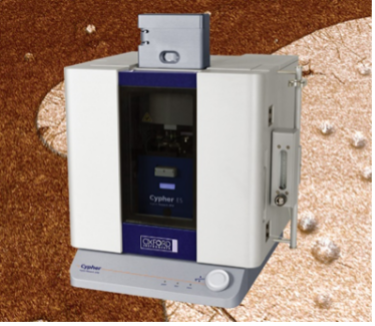
    AFM (Oxford Cypher ES):The atomic force microscope is an analytical instrument for studying material surface structures, widely used in materials science, two-dimensional materials, physics, chemistry, electronic and information devices, and energy research. It characterizes surface morphology at the microscopic scale; with metallic- or magnetic-coated probes, it can also probe the electrical and magnetic properties of surfaces. It can further apply voltage or current to the surface to modify lo